

If you found out we weren’t alone, if someone showed you, proved it to you, would that frighten you?
This is the tagline for Steven Spielberg’s Disclosure Day, an upcoming film about the global revelation of non-human intelligence. Is this a horror movie?
The vibe is cryptic, but nothing screams horror, not the title, the fonts, the music, or anything overt in the trailer. The only overt indicator is one word- frighten. What is there to be frightened of?
At the forefront of the UAP conversation, there is a larger discussion about top-down disclosure having a Christian bias, or at least coming from Christian-influenced sources. In the Age of Disclosure (2025), former director of the UAP Task Force Jay Stratton talks about his superiors in the US government who suppress the UAP subject due to it being “demonic”.
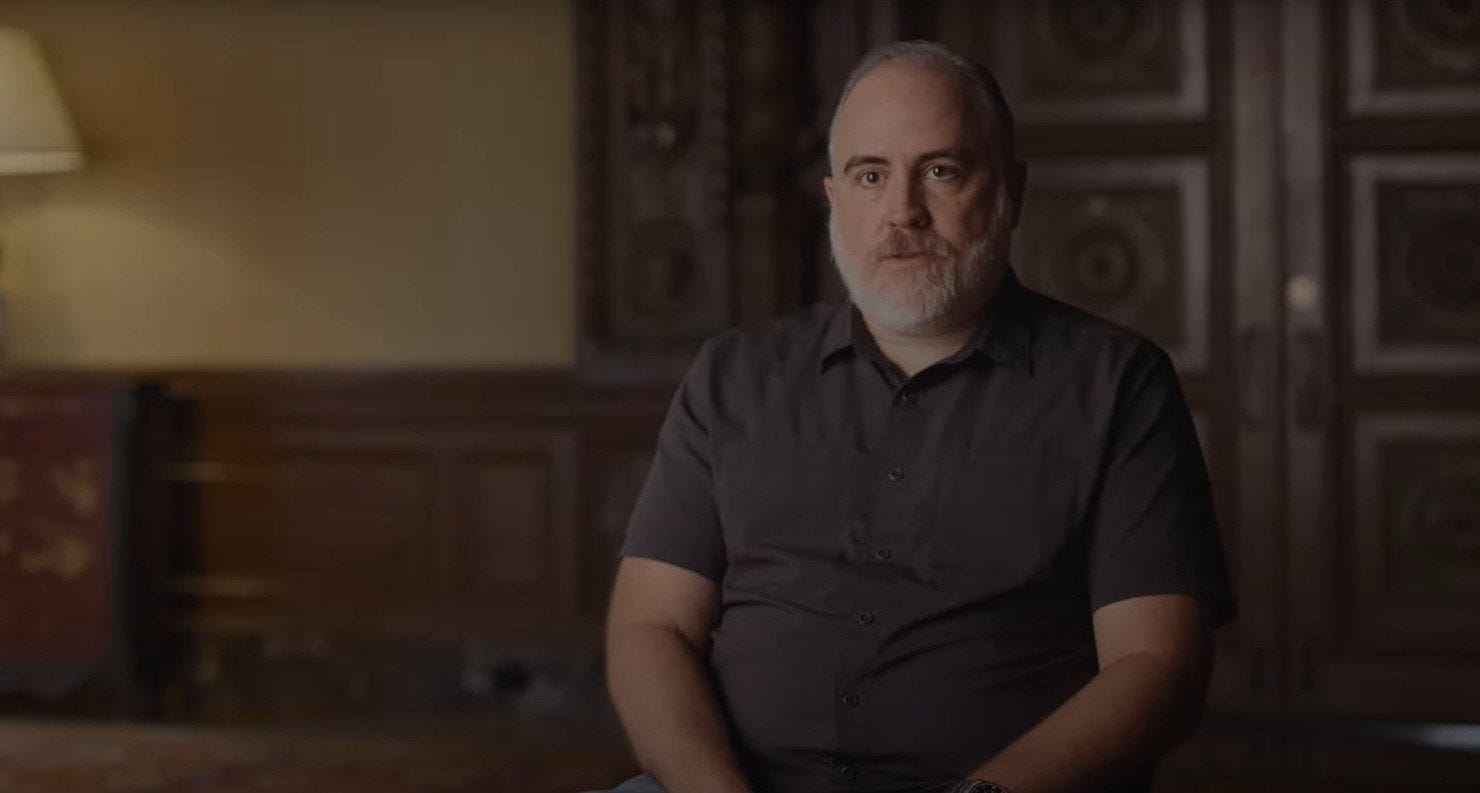
“I had to deal with people who were senior to me who were telling me in their world that these are demons, and we are poking demons and messing in Satan’s world and all these other things. I was like, I can’t believe this is coming out of your mouth. I’m briefing about an advanced aerospace vehicle that has been detected on multiple sensors that is absolutely there, and you’re telling me that you think these are demons and that we shouldn’t look at them and study them”.
And of course, the US is in a phase of Christian nationalism at the same time Trump and his Secretary of Defense have stated they will disclose knowledge of aliens, UFOs and UAP.
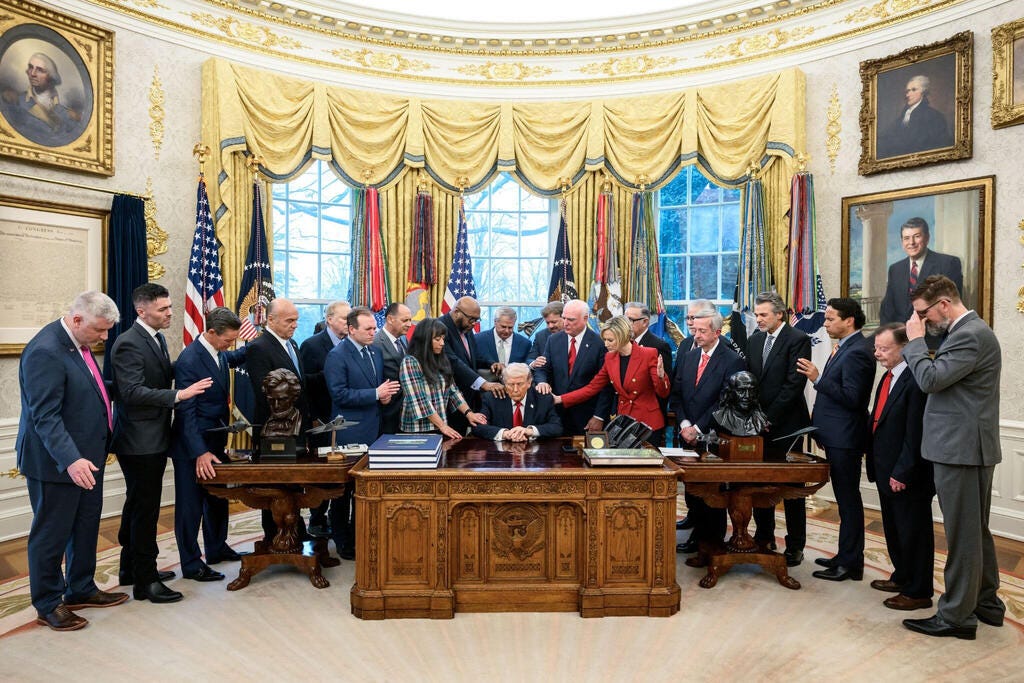
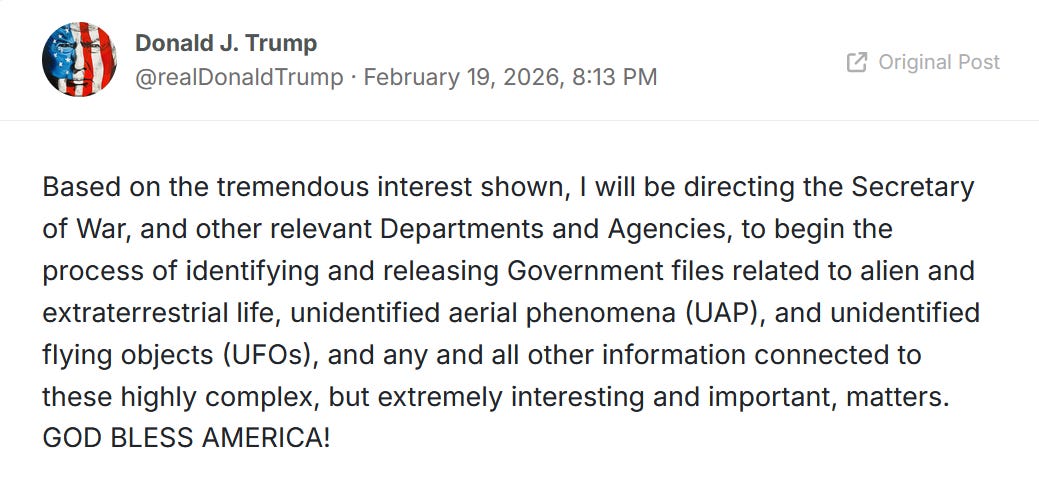
Disclosure of non-human intelligence may indeed cause a crisis of faith for many people, and more importantly, it may harm the power structures that govern them. While that’s an important topic itself, I want to stay grounded and cut to the core issue that has likely prevented disclosure, and reinforced institutional stigma over UFOs and non-human intelligence over the past century.
Fear.
Let’s not beat around the bush. How can we confront fear like adults?
How can we constructively, responsibly accept a reality of NHI, if it is revealed to us?
The Spider Metaphor
A revelation of non-human intelligence could bring out a variety of emotional reactions.
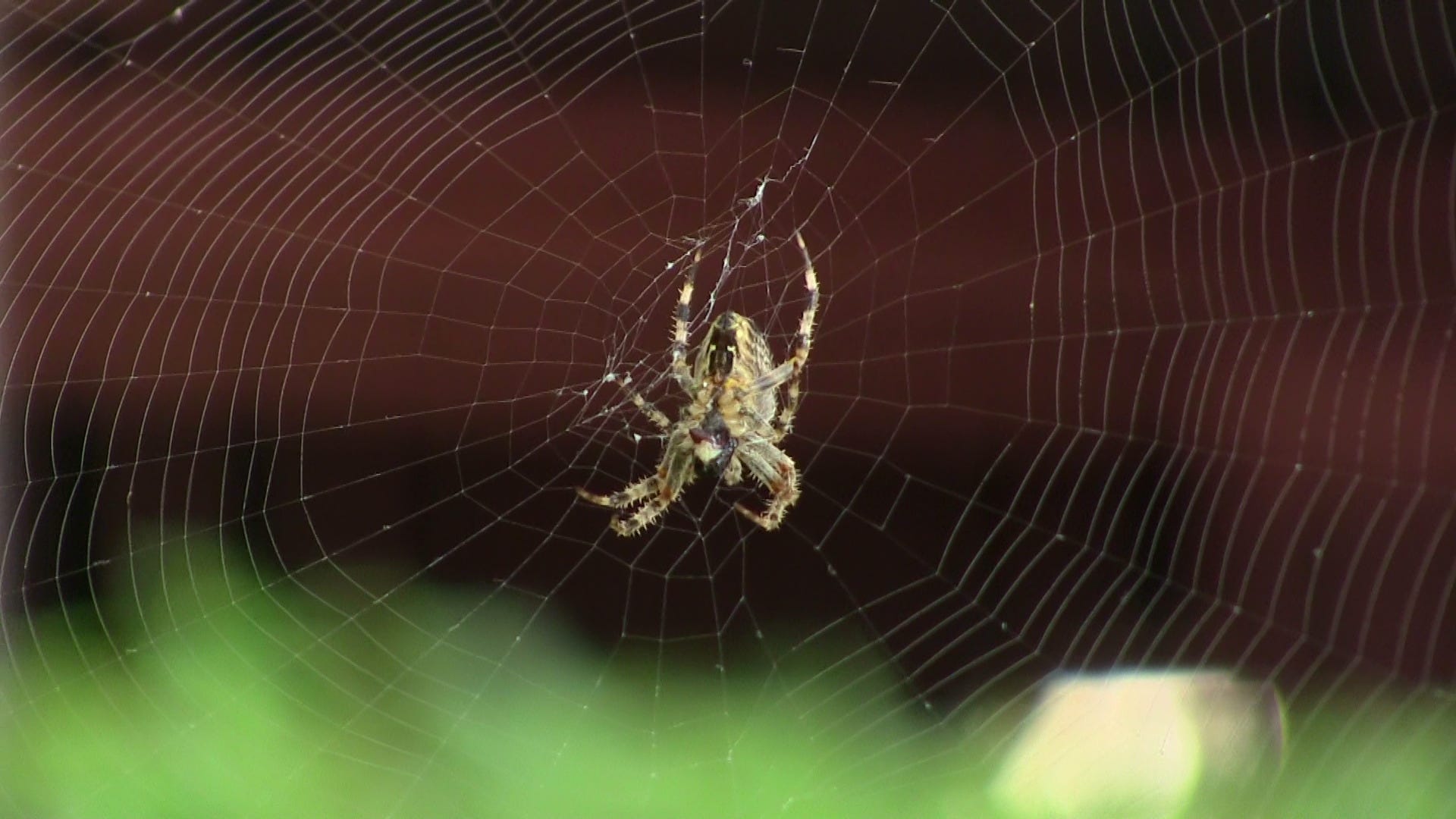
Imagine if you’ve never seen a spider before. A teacher, a family member, or someone you trust says that spiders have eight legs, they are venomous, and feed on insects. They tell you that spiders are a vital part of the Earth’s ecosystem. Then your trusted source shows you some renderings of various species of spiders. She shows you a video of a spider spinning a web. “This is one thing spiders are uniquely known for”. You are seeing the spider move in full motion video for the first time. What is your reaction?
Now imagine if your trusted source tells you that spiders are venomous to humans. Their bites range from being itchy to life-threatening.
“They make webs that get in your face. My backyard is full of them in the spring and I have to watch out for them. My husband kills them on site when I ask him to”.
Then she shows you a video of a spider wrapping up a fly and eating it. How would your reaction be different?
Fears are learned from experience. As adults, given the opportunity, we can often choose how to react to new things we expose ourselves to. We can choose our own narratives and choose what we celebrate and vilify. More importantly, we can choose who to trust, and who to ask for more information.
If we know only a few facts about spiders, who do we seek out to learn from? The entomologist, or the exterminator?
Today, our media landscape chooses our teachers for us. We are exposed to far too many new subjects to truly understand them. We let others curate our opinions for us, and due to lack of time, we have no choice but to take them at their word. Our trusted sources are often outside our own communities, and our communication with them is unidirectional. They are people on screens, and their paychecks come from entertainment studios and news organizations and brands, each of whom have their own interests. They work for the paycheck, not for you.
The revelation of NHI will undoubtedly benefit some of these brands more than others, and there will be competing narratives about what they are. The tough part for us consumers is that we can’t tell a brand’s intentions and values from its products or its marketing. Nestle has a lot more baggage behind it than snack foods and bottled water. Apple is a much greater force in the world beyond its quantity of products in use every day.
The most successful brands create their own customer demand for their products through planned obsolescence and powerful marketing campaigns. Brands have an existential incentive to ensure their customers’ trust and continued business. Everything else, including truth, is secondary.
In case the metaphor isn’t clear enough, we can seamlessly substitute this “brand” for any culture or any religion.
Can we trust ourselves to form our own opinions? Can we let NHI define itself in our lives? This is how biologists classify new species. Science and wisdom tell us that we can record a more accurate view of an organism when we let it define itself- ideally when we don’t interfere with its natural behavior. Can we let NHI define itself, rather than impose our own existing biases on it? Or do we need films like Disclosure Day and a religious disclosure message to define it for us, and plant the seed of fear into the mind of the American consumer?
Disclosure is more about marketing than science.
Maybe the real question is simpler. Have we successfully done this in the past? Can we trust ourselves to look at something entirely new, without imposing our own bias- despite all the forces around us selling us their narratives?
It seems that just like Artificial Intelligence, our discourse around NHI holds up a mirror to our own behavior. Thank you for reading all the way here.
If you like this article, I’m coming out with another one along the same lines that goes into M. Night Shyamalan’s Signs (2002), and the powerfully effective methods he used to make aliens scary.