

What does the President know about aliens? A few recent clips have brought current and past presidents back into the UAP disclosure topic. Are presidents kept in the dark entirely? What parts of the phenomenon are disclosed to the executive?
This article looks at a hypothetical situation:
If Trump discloses the existence of non-human intelligence, should we trust him?
Why or why not?
There are strong cases for and against a future Executive Disclosure, some of which I’ll get into below. The whole premise depends on what is being disclosed- aliens in space, under the oceans, an imminent asteroid or contact event, etc, we don’t know.
But if disclosure is an announcement of alien life, then the actual alien life should be far more important than the motive of the person announcing it, right?
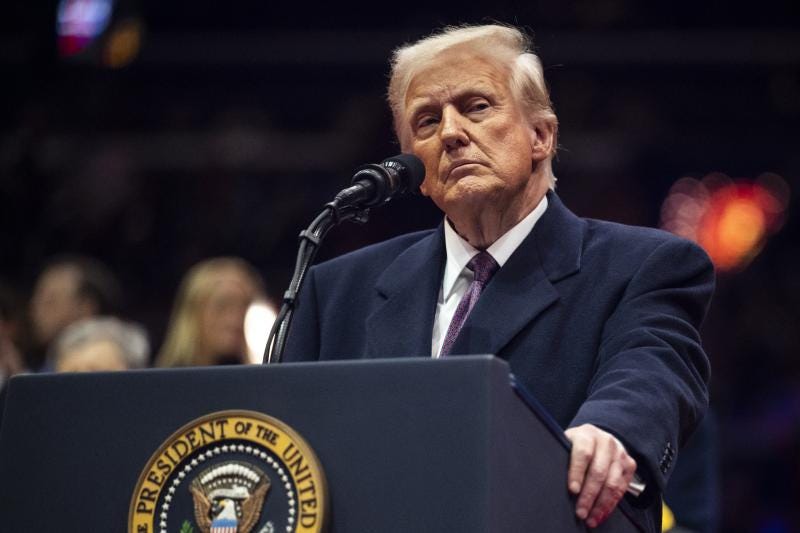
Not if the president is lying.
If you’re reading my Substack, you likely have an idea of what Disclosure is. If you don’t, here is the definition from UFO historian Richard Dolan as summarized from Google.
UFO disclosure is not just a single press conference or a news headline; it is the formal acknowledgment by the world’s governments of a non-human intelligence (NHI) presence on Earth. Dolan views this event as a civilizational “reset” that divides human history into two distinct eras: B.C. (Before Confirmation) and A.D. (After Disclosure).
UFOs (or UAPs) are physical, intelligently controlled craft.
These craft are not made by any known human civilization.
The government has known this for decades and has actively suppressed the information.
For the purposes of this article, we are talking about something I would call Executive Disclosure. Executive Disclosure is an official announcement from the President that non-human intelligence is real, and is an actionable concern of the United States government. While Disclosure in general is simply a global acknowledgement of NHI, Executive Disclosure comes from a few people, and is a message crafted to serve a purpose. That purpose depends on the motives of the President and the people around him.
But first let’s set the stage. What is leading us to believe that Trump might make a disclosure announcement? Why consider this now?
Executive Disclosure Can Happen
1. A recent serious comment from member of The Lincoln Project, Rick Wilson (who is not at all involved in the topic of UFOs) said that Trump has prepared a major press conference about UFOs (starts at 14:42).
2. A recent L’Esspresso article that cites a confidential source saying that the White House is moving UAP-related Special Access Programs from Pentagon control to control under the Oval Office. The article is expanded upon in a fantastic Liberation Times article.
3. Trump is failing in his health and job approval, and he is also named thousands of times in the Epstein files. He has an extremely limited number of options to preserve his legacy.
4. The billionaire class is leaving Earth behind. Private space commercialization, Elon Musk’s moon city, and the race towards artificial general intelligence are all moving capital away from the physical constraints of Earth and towards larger things.
If we’re only looking at the sources above, then Executive Disclosure is still a rumor. But past presidents have openly touched the topic and recognized the significance of a disclosure message. Government whistleblowers and scientists cite that executive action is necessary for disclosure, and is the only way to release them from their NDAs.


For whistleblower David Grusch, who has faced retaliation for his testimony about US government UAP programs, disclosure of any kind would validate his claims and remove the target from his back. Here he is making a calculated appeal to Trump’s narcissism to disclose.
David Grusch:
Certainly, members of this current administration are very well aware of this reality. The current president is very knowledgeable on this subject and I trust his leadership on it. I think he has assembled an “A-team” cabinet, and I really believe if Trump wants to be the greatest president and most consequential leader likely in modern history, he certainly has the knowledge, the capabilities, and the understanding of some of these sensitive government transparency issues.
…
Bret:
You think one, he knows and, two, he is open to transparency on UAPs?
He certainly is very well informed on this issue. I will leave it at that. I don’t want to get into what the president might reveal personally.
So what should we be wary of if Executive Disclosure happens? What questions can we ask to hold power to account, and how can we shape our response to be the most constructive?
Critical Questions for the Executive
1. Who is behind the message? We know a president wouldn’t act alone. This is especially true for Trump, who is almost certainly more of a useful brand name than a leader with coherent ideology. Being a disclosure president might suit his narcissism, but the actual content of the message would have to come from his staff and other outside parties. Who would they be? Who tells the president that NHI are here, and the secret can no longer be kept?
For a national security concern, the message would likely come from National Security Advisor Marco Rubio, or the presidential daily brief, managed by the Director of National Intelligence Tulsi Gabbard.
If we suspect that the Executive Disclosure is not genuine, we might look to the president’s more private connections. Make no mistake, this is conspiracy territory. It would include everyone from Thiel, Musk, Netanyahu, Kushner, and even legacy Epstein connections. These kinds of connections may long predate Trump’s current term as president. These critical investigations would have to be aimed towards anyone who has Trump’s ear.
2. What is being disclosed? What new discovery is being made? Will the executive messaging focus on a particular case, a sighting, or a secret meeting with NHI known only to a few insiders? Or will there be a wave, a trove of evidence that forecasts an imminent event? These two examples, the single case or a wave of circumstantial evidence- both have recent precedents. I’ll be using interstellar object 3iAtlas and the New Jersey unidentified drone sightings as real-world examples to illustrate how the beginning of disclosure might look.
The “Spyglass Case”- 3iAtlas. It’s possible that the only people who can verify the facts of a disclosure announcement are the ones making it. Say, for example that 3iAtlas was material proof of NHI. Say it was covered with non-human propulsion technology that moved it along its path through our solar system at its record setting velocity. It’s possible that NASA had control of the only imaging sensors to see it at a fine enough resolution to make that determination. If there’s a ship on the horizon, and only the captain holds the spyglass, his crew must take him at his word if the distant ship is friendly or not.
The “Invasion Wave”- New Jersey Drones. The other example is more visible and emotionally powerful. Unknown objects are hovering over people’s homes. Locals don’t know what they are, and no law enforcement agency or military branch is positively identifying them. Are they hostile? Is this an invasion? Is this a war against an unknown threat? These are the unidentified “drone” cases that happened over New Jersey in 2024 and parts of the UK and Europe in 2025. This kind of news coverage is likely the closest thing to what the inciting incident of disclosure would look like- and it’s why I featured it on my YouTube channel. Below are some clips from state representatives sharing their concerns about mystery drones in this House Homeland Security congressional hearing in 2024. Note the alarm of the Representatives’ concerns about drones, and the astoundingly weak responses from federal authorities.
4. How does American Executive Disclosure affect the rest of the world? This may be the easiest “second opinion” check. If a US president discloses and every US-allied nation doesn’t have a similar message or acknowledging response, then there is a huge red flag. NHI is a global discovery. A false disclosure would not stand up to international scrutiny, unless the evidence was perfectly contained by US interests.
5. How limited is the disclosure? An executive disclosure would never describe a full picture of the phenomenon. Out of the full body of information that a president has access to, what percentage would be discussed? And how would that small amount be used for public messaging?
When diet soda companies want you to buy their product, they highlight some health facts and don’t include others. When the US extracted Wernher von Braun, Hubertus Strughold and Kurt Debus from Germany as part of Operation Paperclip to build rockets for the US, they didn’t immediately publicize that all three were Nazis who used enslaved labor in their work. Pieces of the story will be left out for a reason. It’s important to identify what holes exist in the message, and how important they are.
6.Why is it important for the public to know? Or rather, why does the President need the public to hear the message? Does a president need public approval? We can recall President Bush’s public speeches that precipitated the invasion of Iraq after 9/11. We also know that Bush’s approval rating shot up to 90% immediately after the attacks. Was public approval necessary then?
Consider the recent extraction operation of Nicolas Maduro. This was a highly classified operation that left Congress out of the loop. The Trump administration didn’t require approval for that, nor for the airstrikes on drug boats in the Caribbean, nor did Bush require Congress to enact the war on terror. For a President to disclose NHI, there would have to be a strong reason to do it publicly. Today, Executive Disclosure would both distract the public from the Epstein Files and supercharge aerospace defense spending.
7. What executive actions happen after disclosure? This is where the rubber meets the road. We can talk about UFOs all day, but it means nothing if there is no money spent, no studies funded, no agencies created, no multi-year plans proposed, and no public perception managed. Disclosure will have economic effects, and it is the richest people who have the most to lose. Say everything you want about UAP being bipartisan. Executive Disclosure is a highly political move. There will be winners and losers, and those decisions will be made by people who have major stakes in the game.
Executive Disclosure / Authoritarian Disclosure
At this point, it’s worth asking if there exists a kind of Executive Disclosure that isn’t authoritarian. What would that entail? Can’t we just replay Reagan’s speech about how quickly our differences worldwide would vanish if we were facing an alien threat? Can we expect any shred of that sentiment to be held in the Oval Office today?
Consider the 2025 documentary The Age of Disclosure. Dozens of high ranking government officials are claiming aliens exist. They claim UFOs are a potential national security threat, and that the Navy and Air Force witnesses we see in congressional hearings are telling the truth. Yet the only material evidence they present are film photographs and scraps of metal. “Trust us”, they say.
“We are the good guys in government, and we’re telling you the truth”.
“But there are also bad guys here who are covering up irrefutable evidence”
“The American people have a right to know”.
Does this message sound familiar?
Are these people, many of whom work in the federal government today, laying the foundation for Executive Disclosure?
The questions above are less about fact finding, and more about accountability and judgment. Like questions from an attorney to a witness on the stand, we must consider the witness’s credibility and character when we don’t have all the facts. Maybe that’s the real lesson. Executive Disclosure isn’t about truth, it’s about power and messaging and trust. When we don’t have the facts, we make decisions on trust.
Who do we trust to tell us what exists, and what doesn’t?
Below is a continuation of Richard Dolan’s definition of Disclosure, and includes other forms of it, some nicer than others.
Fascist Disclosure: A top-down, “controlled” reveal managed by elites to justify a global security state or to maintain power under the guise of protecting humanity from a new threat.
Premature Disclosure: An accidental or forced reveal (e.g., a massive sighting that cannot be ignored or a data leak) that happens before the “secret-keepers” are ready to manage the narrative.
Insider Disclosure: A faction within the intelligence community or the “Breakaway Civilization” decides that the secret is no longer sustainable or ethical and begins a coordinated leak (often what people suspect is happening now with whistleblowers).
People-Driven Disclosure: A bottom-up movement where independent researchers, scientists, and citizens gather enough evidence to make the official denial laughable, essentially “evicting” the secret from the government.
If you made it all the way down here…
Thank you so much for reading! UAP Status is a labor of love and an optimistic view of the topic- something that many channels currently lack. Subscribing helps me parse the secrecy and bring a clear view of UAP to new readers.
Paid subscriptions at $5 per month unlock podcast-quality recordings of all posts. Posts are read aloud by me- not a default AI reader. Thanks again!
-Paul