

September 9, 2025, Washington, DC.
A congressional hearing on UAP, whistleblowers, and government conspiracy is in session. The panel is made of five people, including three firsthand witnesses of UAP, all of them with military backgrounds, one journalist, and one lawyer. This is the third congressional committee hearing with UAP witnesses, with the previous two occurring in 2023, and 2024.
UAP eyewitness Dylan Borland, and acclaimed journalist George Knapp have just testified how the US government publicly discusses UAP as extraterrestrial. Representative from Tennessee Tim Burchett makes a follow up comment.
“If you took an Indian or a Harley to the people that came over here on the Mayflower, you know, they’d see a bright shiny object. They might polish it. They might get it started. I doubt they could. They couldn’t work on it. They wouldn’t have the capability of putting fuel in it. I just think that that’s, you know, we’re just, we’re scratching at something that we don’t have any knowledge of and that’s why it’s just taken so dadgum long. But they do know the first one that cracks that code, it’s over. I mean, it’s energy, it’s power, it’s everything.”
Burchett was speaking in the context of crash retrievals of alien craft, a topic that has been in the UAP lore for a long time, and one that has been discussed in congressional hearings since 2023.
Burchett is not a scientist or an expert in the UAP space. He’s a Christian who’s faith isn’t threatened by the existence of non-human intelligence, and he’s one of the most vocal members of Congress about UAP.
Burchett is a regular guy with a disarming midwestern demeanor. He speaks plainly and sometimes he rides a skateboard to the Hill.
On April 6, Burchett proposed the termination of the All-Domain Anomaly Resolution Office, which, if enacted, would move all of its functions under the discretion of the Secretary of Defense. Burchett is also one of a few members of Congress who have spoken directly to Trump about disclosing American secrets regarding UAP. Burchett believes the president should disclose the truth.
In all practicality, a disclosure announcement by Trump or any president would be more of a political tool than a scientific revelation. For one, the phenomenon is very old. US newspapers have reported UAP for over a century, and the US Air Force has contended with UAP since the day it was established under the National Security act in 1947. The phenomenon is global, and cases take a huge variety of forms. A single televised disclosure announcement would only have time for a keyhole view of the facts, and short term policies enacted by a one or two-term president would likely lead to more harm than good for long term understanding.
I’ve written about what a Trump Disclosure would look like, as well as constructive ways to discern against it.
Executive Disclosure- When the President Announces We Are Not Alone

What does the President know about aliens? A few recent clips have brought current and past presidents back into the UAP disclosure topic. Are presidents kept in the dark entirely? What parts of the phenomenon are disclosed to the executive?
Are We Actually Serious About Crash Retrievals?
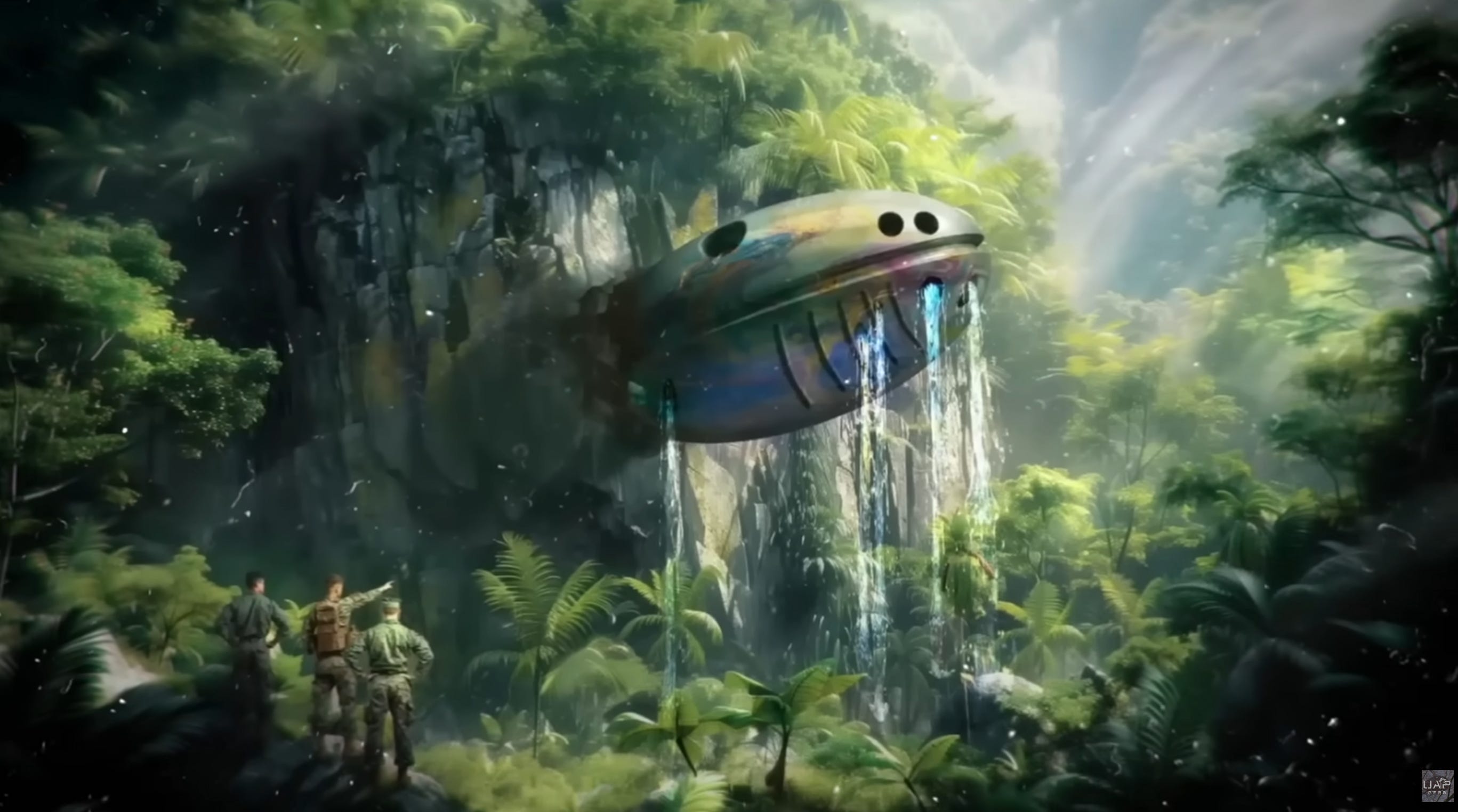
Most experts in the UAP topic take this part of the phenomenon seriously. Obviously not all cases have equal validity, and some have more witnesses and evidence than others, but the phenomenon is real, and it leaves witnesses, paper trails, human health effects, physical trace evidence, and enormous amounts of otherwise inexplicable circumstantial evidence.
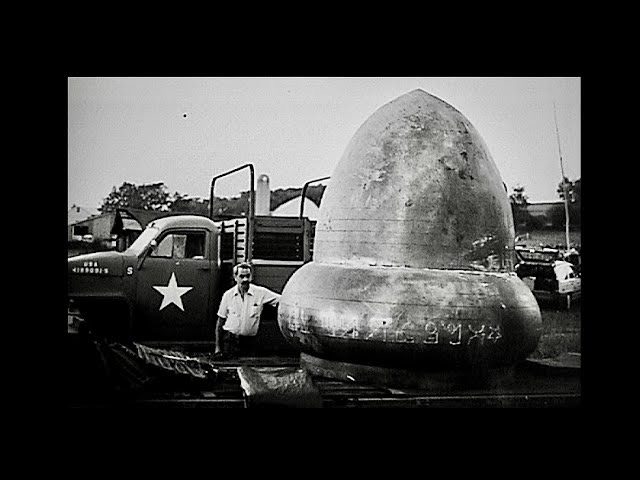
There is no single authoritative catalog of UFO crash retrieval cases. In the absence of that, I’d recommend UAP Gerb’s independent investigations.
Recent activity with the crash retrieval narrative include Jacob Barber’s account, covered extensively by Ross Coulthart and Jesse Michels in the past few years.
James Lacatski of the Defense Intelligence Agency and program manager of AAWSAP, has stated publicly that government officials have been inside at least one of these craft.
Beyond today’s mainstream narrative of crash retrievals there is Leonard Stringfield’s archives written from 1978-1994.
If this narrative of reverse engineered crash retrievals has any truth, then there is an enormous gap of existential knowledge between those who know and accept their existence, and the rest of us who don’t. For further reading on this essential class difference, I would highly recommend Catherin Austin Fitts’ work on black budgets- the economic engines that power clandestine work, as well as Richard Dolan’s text on the “Breakaway Civilization”, the group that benefits from this otherworldly advanced technology.
The Incentives are Out There
What’s the going price for world domination?
In today’s growing techno-fascist surveillance economy, being the sole controller of technology 50 years ahead of the current state of the art sounds like a holy grail. Consider today’s race towards artificial general intelligence. Founders of Anthropic and Google Deepmind admit the race to build AGI comes at the cost of consumer safety and ethics. AI models today are long term strategic tools of national security, and Sam Altman has described his work as today’s Manhattan Project. The spending is astronomical, and the shared mindset is along the lines of “If we don’t control the first artificial general intelligence, someone else will”. An AGI constructed from large language models would not be human, yet it would be used and trusted to do incredible tasks for its owners. Tech entrepreneurs don’t care if their miracles are delivered by things that aren’t human. They move forward regardless.
It may be no surprise, but today’s tech leaders have serious opinions on UAP or non-human intelligence. Dario Amodei, founder of Anthropic talks about the 1997 film Contact as a valuable analogy for encountering something truly new like AGI. Palmer Luckey, head of Anduril has expressed interest in UAP, specifically USOs (underwater submerged objects) with an ancient undersea origin. Elon Musk’s public opinion on UFOs has grown with the development of SpaceX, although he still closes his statements with jokes. Peter Thiel’s investment capital has funded Enigma Labs, a UAP tracking and database app. Anna Brady-Estevez of American Deep Tech and the National Science Foundation is possibly the most illuminating voice on the enterpreneurial perspective on UAP. She is an exemplar of not requiring mainstream scientific or political consensus (that UAP exist) as a prerequisite to innovate and fund long-term projects.
“If you’re building the highest performing systems what type of resources would you put in place? So if we look at… and I’m sharing kind of casually googled numbers so you can we can get to better definition… but how much money went into the ISS, our long-term in-space laboratory? Some of the numbers online say that it was well over 70 billion for the US part of that and with other nations contributions it might be 150 billion. What was the cost of the Apollo program? That was 26 billion, from the ‘60s to the 70s. Some estimates put that at inflation adjusted well well over 200, perhaps $250 billion. So, if you were to ask me today, what is the right amount of money to be investing in these ultra high-performing technologies, these Manhattan style projects? It’s well into the hundreds of billions of dollars. That’s the right answer today. Whether the US makes that investment or whether somebody else does, we are talking about advantage for multi- trillion dollar markets.”
Anna Brady Estevez at the UAP Disclosure Fund in 2025.
How Advanced is UAP Technology?
Some ideas are too big for us. H.P. Lovecraft’s work describes cosmic beings too large to comprehend, and exposure to them results in insanity. Author qntm’s There is No Antimemetics Division is a more recent book that explores similar entities that are impossible to process with your human brain alone (memory manipulation through medication and strict protocol are required).
A more academic precedent for future tech comes from Harold Puthoff and his contracted Defense Industrial Reference Documents (DIRDs). Puthoff’s company EarthTech International was contracted by Bigelow Advanced Aerospace Space Studies (BAASS) to commission unclassified papers from experts around the world to predict where their fields of study would be in 2050. The reasoning was that if UAP used technology built by an advanced intelligence, the best method of approach would be to get the current state of “aerospace futures”, rather than the current state of aerospace tech.
The DIRDs were part of the legacy of AATIP and AAWSAP, the 2008-2009 Defense Intelligence Agency program whose primary purpose was to investigate UAP from a potential technological threat perspective. The DIRDs are fascinating reads, and they suggest that UAP are not just a phenomenon to be studied- they are a superior force to be examined and exploited. The DIRDs include white papers on spacetime metric engineering, traversable wormholes, invisibility cloaking, and much much more.
Link to the Defense Industrial Reference Documents Collection
The Intelligence Differential
What would a colonist on the Mayflower think of a modern motorcycle?
Thanks to our historical record, we have seen an incredibly wide spectrum of human knowledge and intelligence. It’s difficult to imagine how some of our technological achievements today would be interpreted hundreds of years ago.
The man ran his hand over the impossibly crafted machine. It was made of polished metal and crystal, fused together seamlessly. Suddenly, upon his gesture, the machine lit from within. Illusions swirled and bobbed at his touch, and language appeared on its surface. The light was far more sophisticated than anything that fire and colored glass could produce. He wiped his thumb over the material and its appearance reacted. He felt as if he was sculpting reality itself.
-Leonardo Davinci, discovering an iPhone
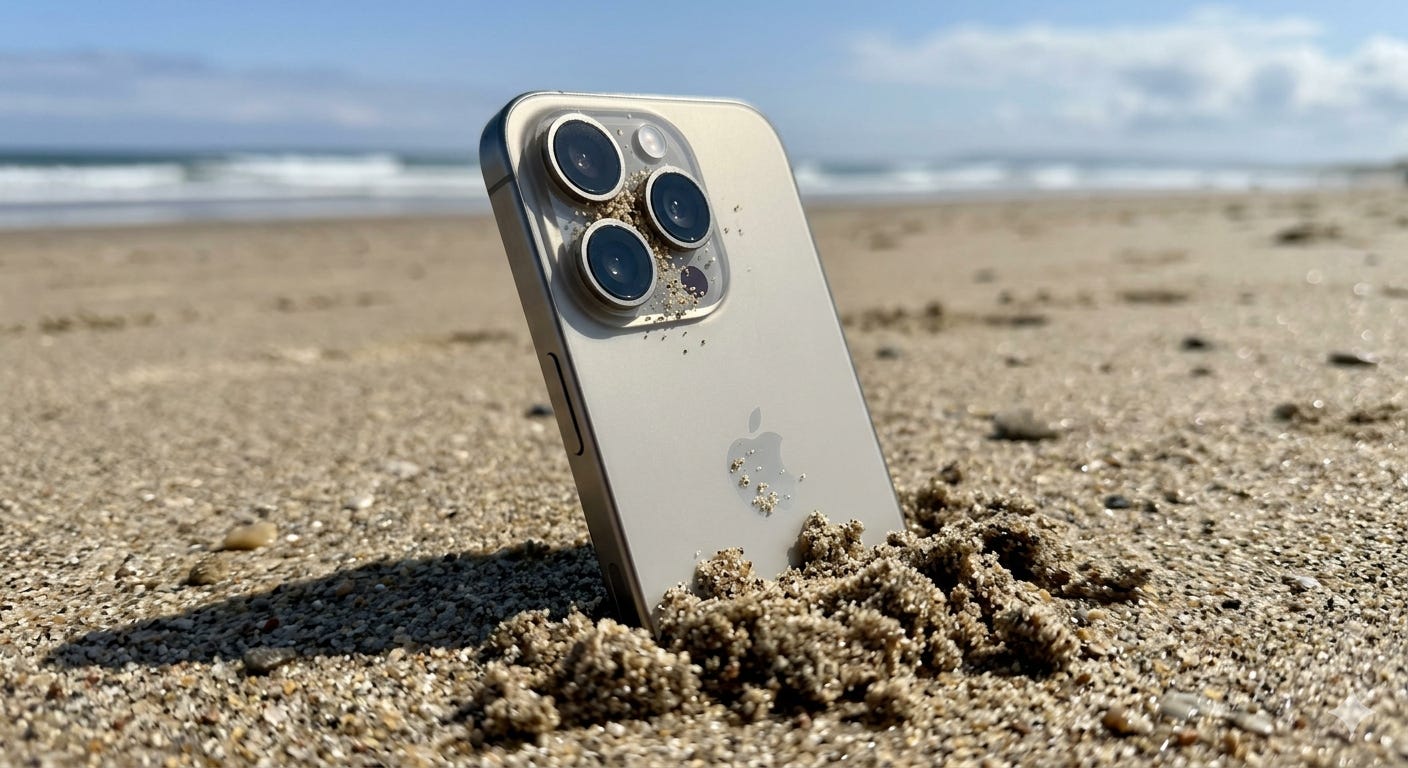
We might consider how impossible the very concept of a mobile phone would be to people of antiquity. A genius-level intellect of the era would mean little, yet in the far future, Davinci’s own species would go on to build that very device that puzzled him.
Theoretically, the iPhone could exist in the 16th century. The raw material existed on Earth, and the laws of physics were the same then as they are in 2026. One could make the argument that the only thing holding back DaVinci from slowly reverse-engineering the iPhone is knowledge. It would take 500 years until the scientific understanding was mature enough, but the iPhone would eventually be built.
We can plot the invention of the sundial and the iPhone on the same timeline. Some people will see this knowledge differential and they will extrapolate the plot forward into the future.
What would DaVinci think when he learned that the iPhone was a common device? That there were multiple variations made over time, each with a slightly different form and function. They weren’t built by a single genius, but by a vast network of mostly automated processes. The one he held would be just one of billions.
UAP Status is a labor of love and an optimistic view on a topic that rarely gets one. Paid subscriptions support me directly, and unlock special access to all articles read aloud by me and not a synthetic AI voice. Thanks for reading!
-Paul