Disclosure is the transfer of information. It’s the event where party A, which has secret knowledge, discloses some amount of that knowledge to party B. Thanks to a combination of genuine public interest and strong PR, we’ve seen Disclosure framed as a righteous course-correcting event that enlightens the world. Break the secrecy, reveal the truth, deliver justice for the people harmed by the cover up. The world deserves to know, and so on. The recent Spielberg film Disclosure Day picked up this trend and sold it right back to us.
The messaging couldn’t be more clear. Disclosure is justice.
But this concept of disclosure-justice is short sighted.
Will we be satisfied, or will we discover that Disclosure wasn’t the only thing we wanted?
The Epstein Files Transparency Act was a recent form of limited disclosure carried out by the Department of Justice. By the end of January of 2026, when the DOJ failed to produce millions of files in a possible violation of the law, and no prosecutions or arrests were made (aside from three in Europe), the public opinion was clear. The people didn’t just want information, they wanted accountability, action, and justice.
It makes sense that justice can only be delivered after disclosure, but what else can we expect on the other side?
The Disclosure Foundation has their own plan and recommends that the sitting presidential administration and the Department of Health and Human Services are to be at the top of the hierarchy of their national preparedness strategy.
One organization that I think deserves to be taken the most seriously is uNHIdden, a non-profit led by medical doctors and clinical psychologists. uNHIdden’s Preparedness Plan describes disclosure more explicitly as a potential public health crisis and uses WHO emergency preparedness methodology.
The general consensus among all of these voices are that Disclosure will first manifest as a crisis of uncertainty and psychological health. Religious leaders and their follower’s faith will be tested. Markets will become more volatile. Special government bodies will be formed to keep institutional trust intact, and reduce ontological shock. This idea is described in the uNHIdden preparedness plan.
Every previous public health emergency, however catastrophic, has occurred within an intact framework of reality. Earthquakes, pandemics, wars, industrial disasters - however devastating - happen in a world whose basic nature remains understood. The world after the event is recognizably continuous with the world before it: diminished and damaged but not fundamentally altered in its character.
…
If it were confirmed that humanity is not alone - and potentially not the apex form of intelligence - the challenge would not be an event occurring within an established understanding of reality. Rather, it could be a discovery that the prevailing framework through which most people interpret reality is fundamentally incomplete. The disorientation that follows - across worldview, identity and perceived safety - is what this report means by ‘ontological shock’.
Managing the Message
All of the mentions of Disclosure so far put the power in the hands of government and private secret keepers. It puts the US government on a pedestal since they supposedly have the answers that the rest of us don’t. This sets the stage for exploitation.
Knowledge becomes political leverage. If only party A has the answers, there is little leverage for party B to call a bluff or catch a lie. Imagine for example, if a non-human intelligence can communicate with humans via any state of the art large language model, or AI. Imagine if the US president strategically lies, and claims that the NHI can only communicate through a single American-made LLM. This lie would have significant political consequences, and the public would have no recourse without insider knowledge.
Obviously, there is a great incentive to twist the truth if you’re the sole controller of the message. Politicians and executives do this all the time, yet this kind of single source disclosure is what the Disclosure Foundation says they want. This is what the Task Force for Declassification of Federal Secrets have been saying their goal is for years. This is what David Grusch and Lue Elizondo say in their media circuits. They all want to escalate the issue to Trump’s desk and let the White House declassify files and announce what the government knows.
Operation Paperclip was the name of a classified US operation that extracted high-value German scientists out of Nazi Germany after the war to work on America’s aerospace and weapons industries. The Soviet Union had their own operations doing the same thing. I believe a version of this is likely happening today.
With Paperclip Disclosure, instead of German scientists, it will be career UAP secret keepers- engineers, scientists and subject matter experts- all recruitable talent with value to give to the rapidly growing space and surveillance data industries.
Just like the extracted Nazis, these subject matter experts’ records will be sanitized, they will be paid, and they will be granted amnesty for crimes committed as part of their organization’s work.
Obviously, not all of these experts are criminals, but even so, amnesty has been a practical part of the disclosure push. The amnesty deal is a central message in the 2025 documentary The Age of Disclosure.
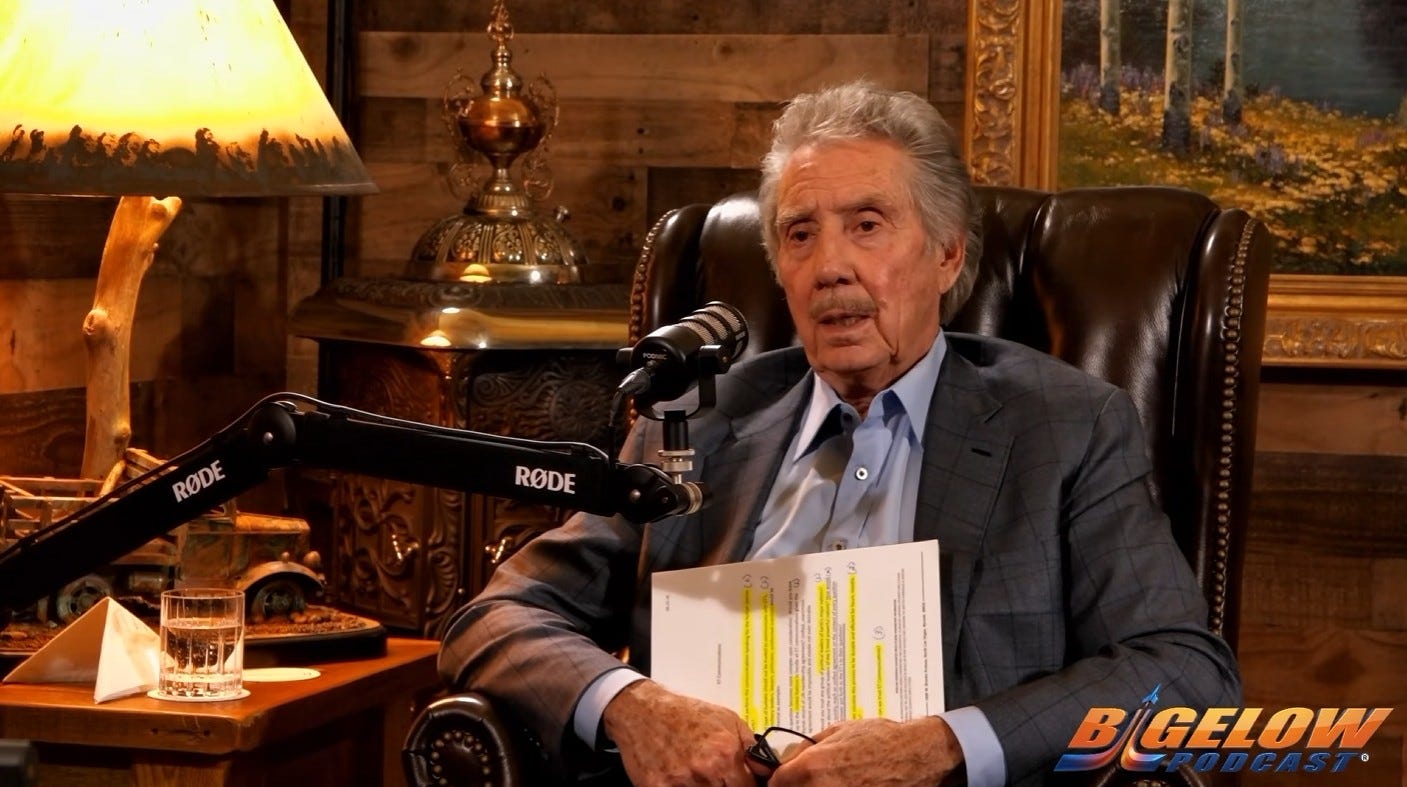
Another clear proponent for an amnesty deal is the billionaire Robert Bigelow. In a recent interview, Bigelow talks about his meeting with not-yet Republican nominee Trump in 2024, and how he tried persuading him about what to do with disclosure in a possible second presidential term.
I wanted him to focus on gatekeepers. And I emphasize these people because they’re the ones that are in government locations and private corporation locations that have spent their substantial lives or careers working in very secluded environments and they have custody of the goods. More information than— they are diamonds in a coal mine. They have obtained information about ET themselves, about hardware. Other countries are working on this exact same thing. So you have to be careful not to talk about things that would give other people advantages and so on. And uh the gatekeepers, I’ve told people that they are heroes of a different kind. A lot of people would laugh at that, but it’s true. It’s true. They go to their graves taking information that they- their spouses have never heard, their children have never heard, they can’t talk about it to any friend. So they’re isolated about that. And and after a while, I think that must be a burden, you know, to to hold those kinds of secrets.
After four books about AAWSAP, Robert Bigelow wants to tell his own version of events on his own podcast…with extensive notes and quoting the books about AAWSAP.
Bigelow is choosing his words carefully. In 2008, Bigelow Aerospace’s classified research division BAASS- (Bigelow Aerospace Advanced Space Studies)- began executing the Defense Intelligence Agency’s program called AAWSAP- the Advanced Aerospace Special Weapon Systems Applications Program. This isn’t Bigelow’s first rodeo with classified government UAP programs, and it’s not his first time courting Trump. In 2024, Bigelow donated $1 million to Trump’s legal fees during his presidential run, and also donated $20 million to PACs to help get him elected.
My interpretation is that Bigelow sees gatekeepers as assets. He and other wealthy individuals are willing to invest in Trump’s success, and Trump, at the center of every controversy you could name, is willing to sell it.
The Tragic Part
A slight change of pace. At this point you’ll have noticed some strong emotional narratives. Secrecy is oppressive. Whistleblowers are threatened by their employers and worse. Some people have died in mysterious circumstances. Their stories have built the emotional narrative we know today.
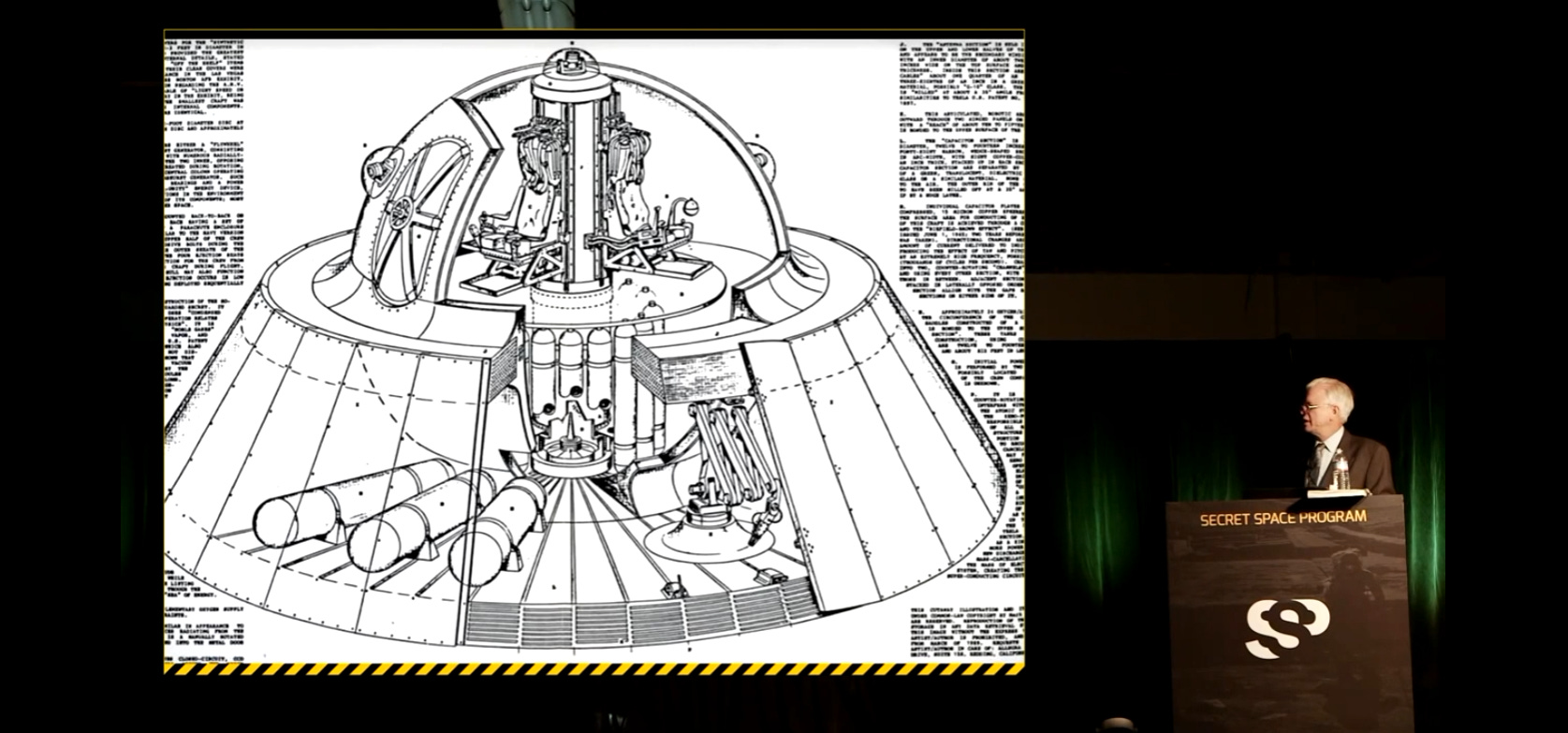
Mark McCandlish was an aviation illustrator for over 30 years who rendered the “Fluxliner” from detailed descriptions that his friend made after seeing a hovering circular craft during a classified aircraft showing at Norton Air Force Base in 1988. McCandlish told this story for years. In 2021, during the period of transitions of government offices and policies on UAP, McCandlish allegedly offered to testify to the Senate Intelligence Committee, though no direct source has been found to confirm that. In 2021 he was found dead in his home from a self-inflicted gunshot wound to the head. His highly detailed explanation of the Fluxliner illustration and other UAP-related claims can be found here from his presentation in 2014.
McCandlish at the 2014 Secret Space Program conference presenting his story and illustration of the hovering craft seen at the 1988 showcase at Norton AFB.
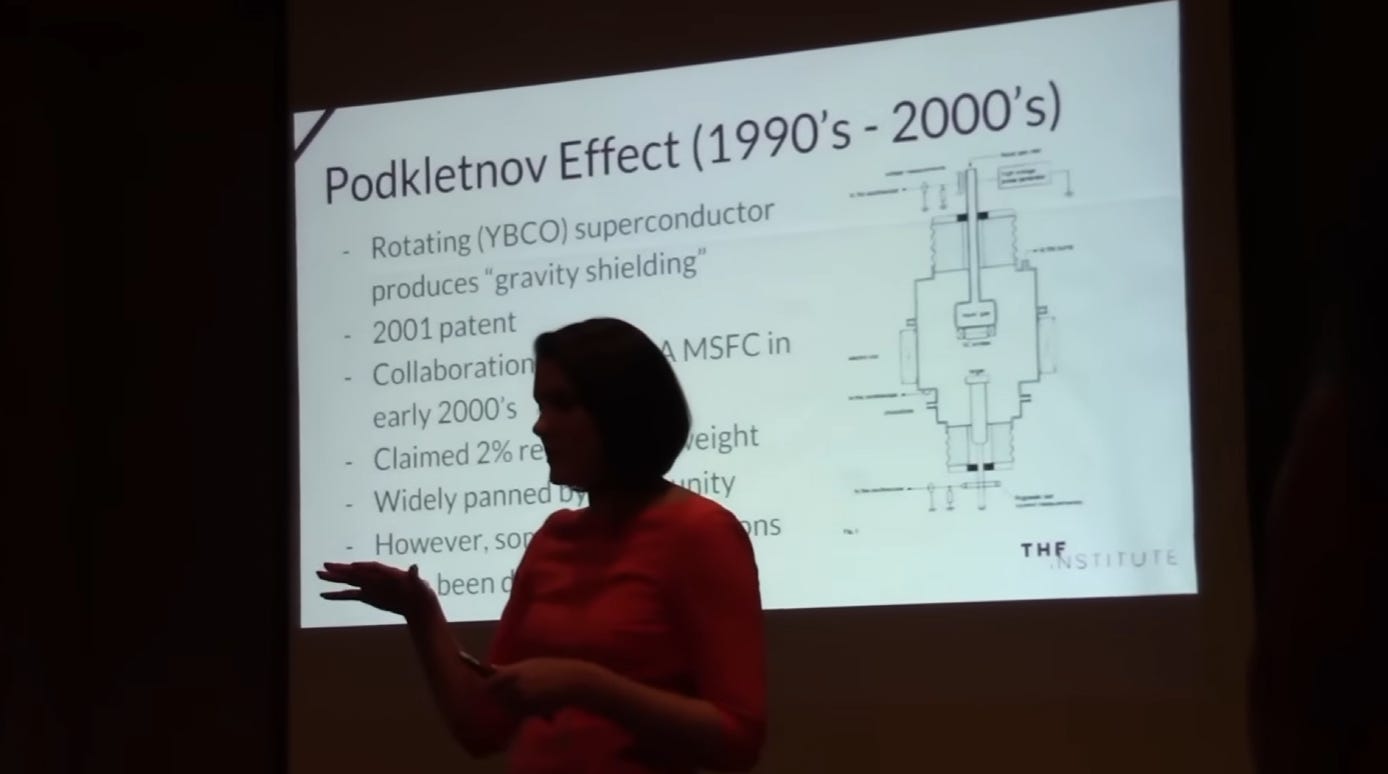
Amy Eskridge was a scientist and entrepreneur from Huntsville, Alabama, one of many classified testing grounds of American rocket science and aerospace engineering. In her early 30’s her company proposed to bring novel physics and engineering solutions to select civilian clients after recognizing the insular and sluggish conditions under which such research was managed. In her last year of life, she reported periods of systematic harassment and intimidation, including home invasions, drugged beverages, and injuries from what she suspected were direct energy weapons. In June of 2022, Amy Eskridge was found dead from a self-inflicted gunshot wound.
Many people close to her story talk about her death as driven by her own mental and emotional illnesses. I’d argue that basing the greater conspiracy on whether or not she killed herself is the wrong path. What matters is if she was the target of intimidation in the first place.
Amy Eskridge presenting a history of gravity propulsion studies at the Huntsville Alabama L-5 Society.
Some heartbreaking stories are about people who simply dared to report on the subject. James Allen, a filmmaker whose UAP documentary focuses on Mark McCandlish’s story, developed a rare cancer shortly before his film was finished. Toxic metals were found in his blood and he and his coproducer reported signs of being monitored- phone problems, delayed texts, and odd messages. Less than three months later, Allen had succumbed to his cancer and died in 2014. McCandlish himself speaks about Allen’s suspicious death in his 2014 presentation. As a personal note, Allen’s documentary and the story of his death had a great effect one me and propelled me into the larger UAP topic years ago.
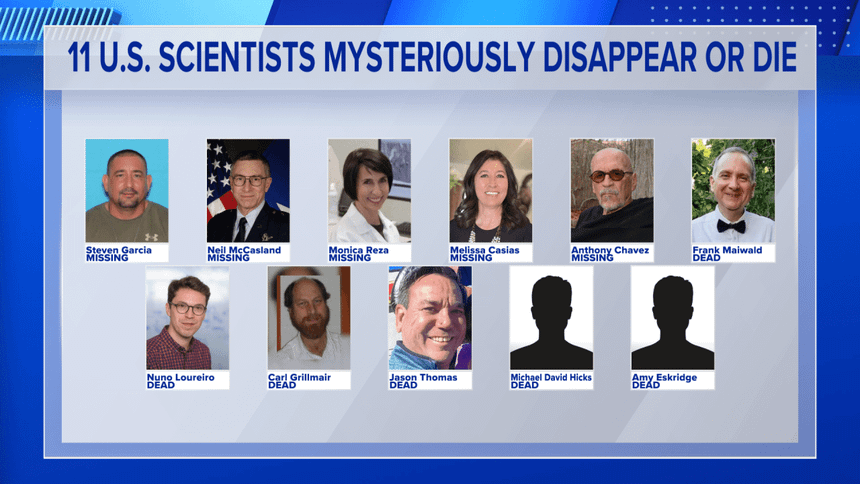
In 2026 there were more cases that broke into the national news cycle, including the disappearances of retired Air Force General Neil McCasland- Commander of the Air Force Research Laboratory at Wright-Patterson AFB, and executive secretary of SAPOC- the Special Access Program Oversight Committee- a government body that manages SAPs- special access programs that can’t be accessed without a need-to-know. Most of today’s understanding of government UAP programs theorize that UAP data and operations are kept inside these SAPs.
Are American citizens being harmed and killed for threatening to reveal the government’s work with UAP? We might ask what evidence we would need to prove such a case, and how much we already have. We might also consider that investigating these cases would be risky.
If one of these investigations happened, would the public even hear about its results? Murder, intimidation and kidnapping aren’t the only tools of a cover up. Sometimes character assassinations, bribing witnesses and journalists, and hiding evidence is enough to stop any investigation and turn up null results.
Underneath all the speculation is the emotional narrative that helps carry these stories from speaker to listener. One person who has made great use of this technique is Lue Elizondo. His disclosure PR across more than a hundred media appearances and podcasts have done a lot for the topic. Lue’s vulnerable underdog mentality is appealing to people who feel stepped on. He acknowledges the dysphoria- that fundamental sense that something is wrong- and it goes a long way for people seeking answers when the mainstream media have none.
Lue of course has had a thin tightrope to walk. He avoids talking about his past work in counterintelligence as much as possible, and he frames two sides of the government- the bad guys who hold the secrets and punish whistleblowers, and the “patriots” who work under secrecy and have knowledge they want to disclose. This kind of “patriot vs deep state” narrative has kept many Republicans engaged in political battles for a long time, and it has been expertly applied to the UFO community.
Elizondo isn’t the only one. Jeremy Corbell and the whistleblowers he has interviewed have all contributed to this narrative of disclosure justice. They lend credibility through their government credentials, and play a similar role by describing the consequences and retaliation they’ve faced after going public.
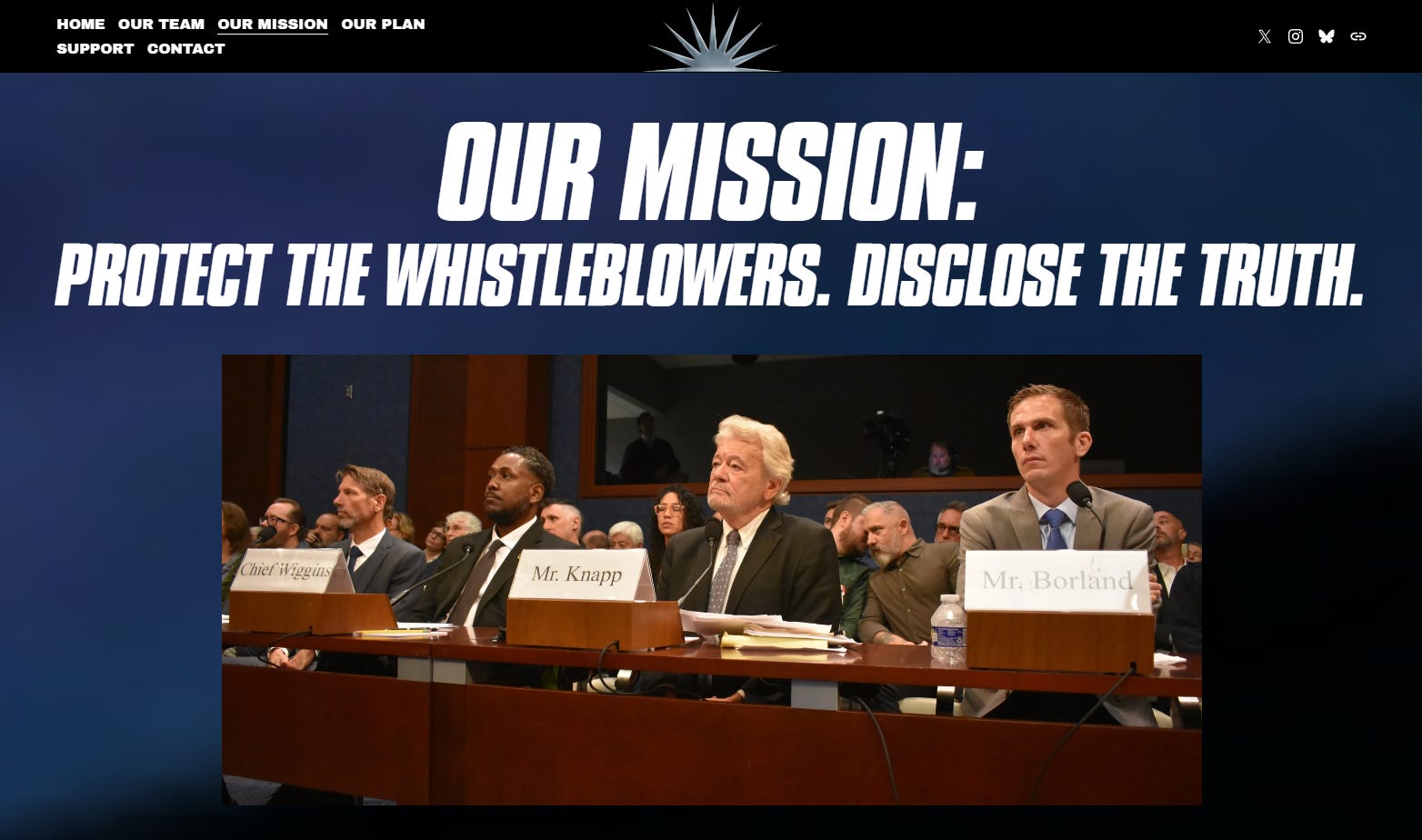
Vanguard Enterprise. One of many organizations aiming to have Trump enact Disclosure.
Which brings me to the most tragic part. Brown, Borland, and Nuccetelli have formed Vanguard Enterprise, an organization protecting and offering support for UAP whistleblowers. Recently, or perhaps since it’s very inception, Vanguard Enterprise has fallen in line with the Task Force Republicans and David Grusch to persuade the Trump administration to enact disclosure.
These disclosure advocates clearly see a future for their cause in such unpopular characters. I question their judgment if only to ask if they think a critical mass of American people would take Trump’s message of disclosure at face value.
What are we asking for?
If we say we want Disclosure, what are we specifically asking for? Do we want validation? Do we want to be heard and acknowledged that these anomalous experiences are not only real, but worth studying? Are we motivated by justice? Do we want the government to acknowledge the crimes of its darker elements? Or are we looking for accountability in a system that seems allergic to it?
This article is a long way to spell out a few points.
The UAP media cycle has conflated Disclosure with justice.
Disclosure is a Trojan Horse. On the surface it is justice, but inside is the tech transfer of Paperclip Disclosure.
Handing over Disclosure responsibility to the White House because it validates an emotional need is a mistake.
The wealthy players and their incentives are visible. We shouldn’t voluntarily trust their judgment on UAP when they can’t be held accountable for simpler things.
If you made it all the way here, thank you so much for reading!
UAP Status is a labor of love and your support helps me parse the most coherent parts of the topic for new eyes and ears.
Check out my Youtubeand Instagramchannels- both called UAP Status. They are a collection of the most coherent and interesting clips from four years of congressional hearings about UAP and government secrecy. It’s scrollable like TikTok, and it’s exposure to the credibility of the topic. Perfect for introducing it to new people in your life.